|
EMCRETE is a
flexible, durable, high-impact elastomeric concrete material. EMCRETE is
primarily used as a component of an expansion joint assembly either to
fill blockouts on each side of a expansion joint gap, to repair a
damaged expansion joint gap edge, as an impact-absorbing backfill
nosing, or as a fast-curing patching material for potholes, or spalls on
concrete roadways, parking surfaces, bridges, runways, etc.
EMCRETE is comprised of a two-component polyurethane resin mixed with
sand and chopped fiberglass aggregates. The sand imparts compressive
strength. The fiber provides cross-linked reinforcement while, in
combination with the sand, adds body to the polyurethane resin.
TYPICAL USES
Some of the typical uses of
EMCRETE within EMSEAL expansion joint systems are:
Repair
To repair spalled gap edges in high load-bearing applications. The
spalled concrete must be cut out using industry standards for concrete
repair. Once the gap edge has been cut and cleaned, the self-leveling
EMCRETE can be poured to form an elastomeric gap edge that is more
resistant to spalling and gap edge deterioration.
Elastomeric Concrete
To act as an elastomeric concrete where the possibility of spalling or
cracking is a concern for standard concrete or where existing spalls or
potholes in concrete roadways, runways, bridges etc. is required.
Encapsulate and Embed
To encapsulate and embed the punched flanges (wings) of the
THERMAFLEX
joint systems. In this role, EMCRETE acts to mechanically lock the
flanges of the expansion joint to the deck while adhering to the
concrete and creating a watertight seal. The cured nosing material acts
to protect the joint edge and absorb suddenly applied vehicle loads.
Leveling and Dampening
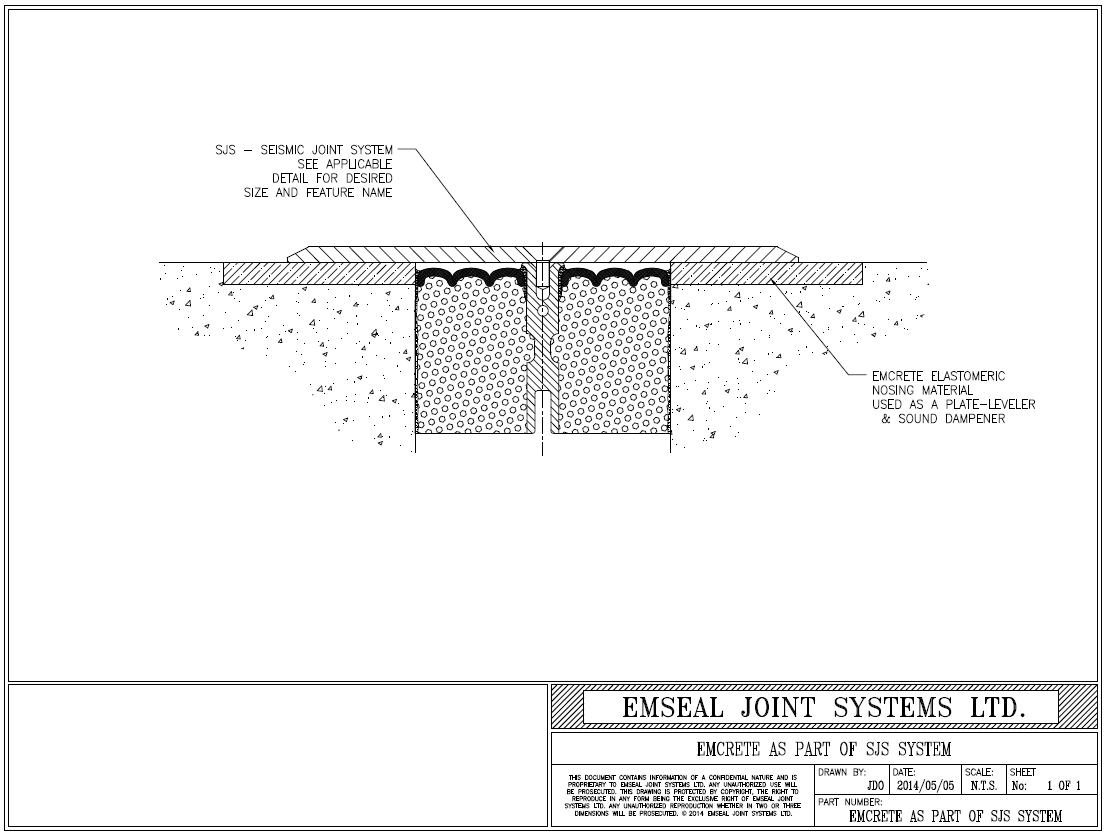
As a leveling bed and sound dampening support of the coverplates of
EMSEAL SJS Seismic Joint Systems systems. The SJS family of products
from EMSEAL are coverplate systems secured to a precompressed foam and
spline assembly. The coverplates ride on the deck surface. It is typical
to form, cut or grind a shallow blockout on each side of the joint gap
and fill this with EMCRETE. This provides a surface that can be grinded
to ensure that the coverplates do not rock and are fully supported over
their entire contact area. Ensuring the plates are properly supported
while absorbing the shocks of vehicular impact both contribute in
attenuating sound.
Impact Absorbing
As an impact-absorbing header material behind the rails of EMSEAL FP
systems. MIGUTAN, DSM-FP, and SJS-FP are systems designed for
installation in split-slab conditions. These systems install onto the
structural slab and feature watertight integration with the split-slab
waterproofing membrane through integral side flashing sheets supplied
with the expansion joint system.

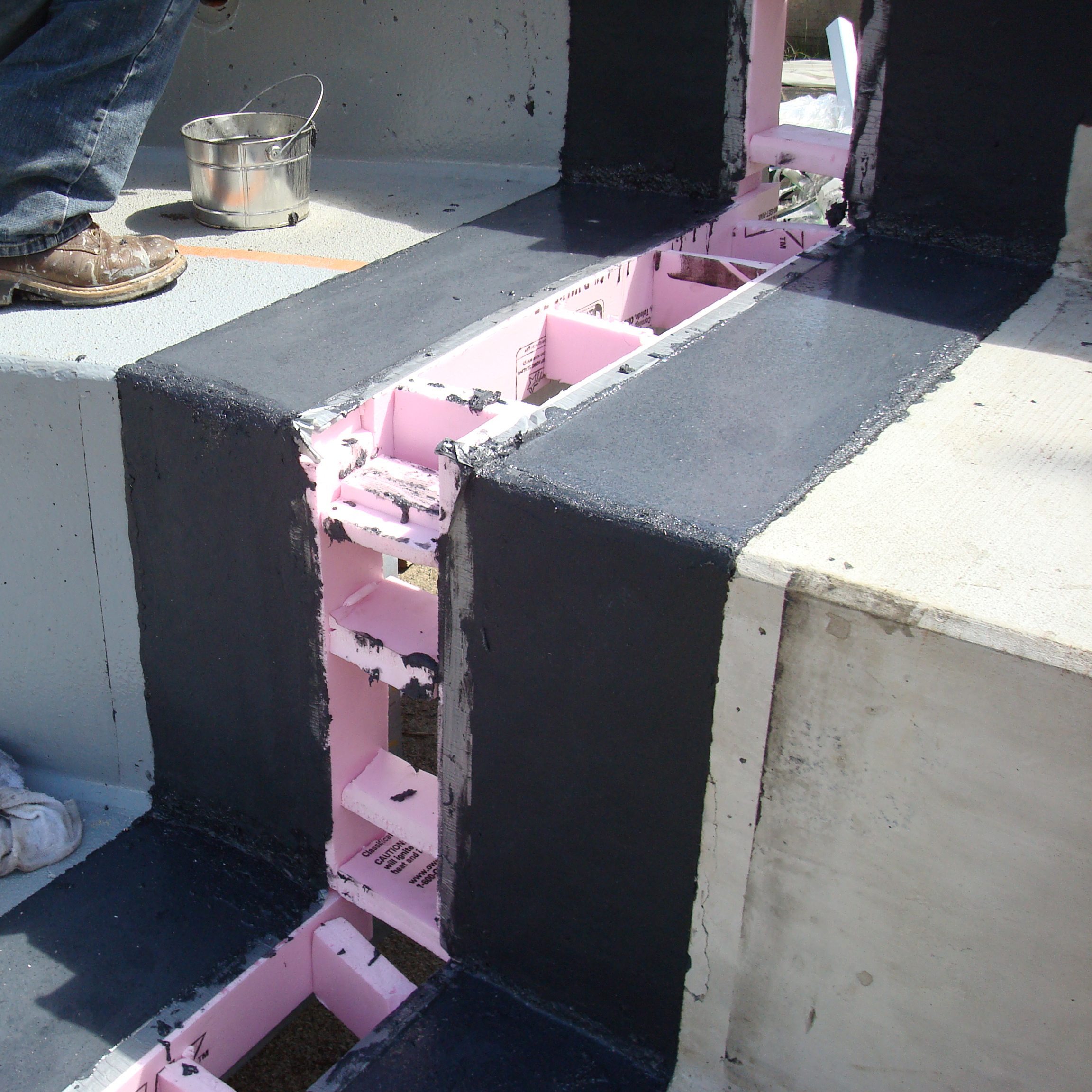
EMCRETE used as expansion joint nosing material. Pictured here with
DSM preformed foam expansion
joint from EMSEAL.

EMCRETE is an excellent patching material used for concrete spalls and
potholes in decks and surfaces.

Because
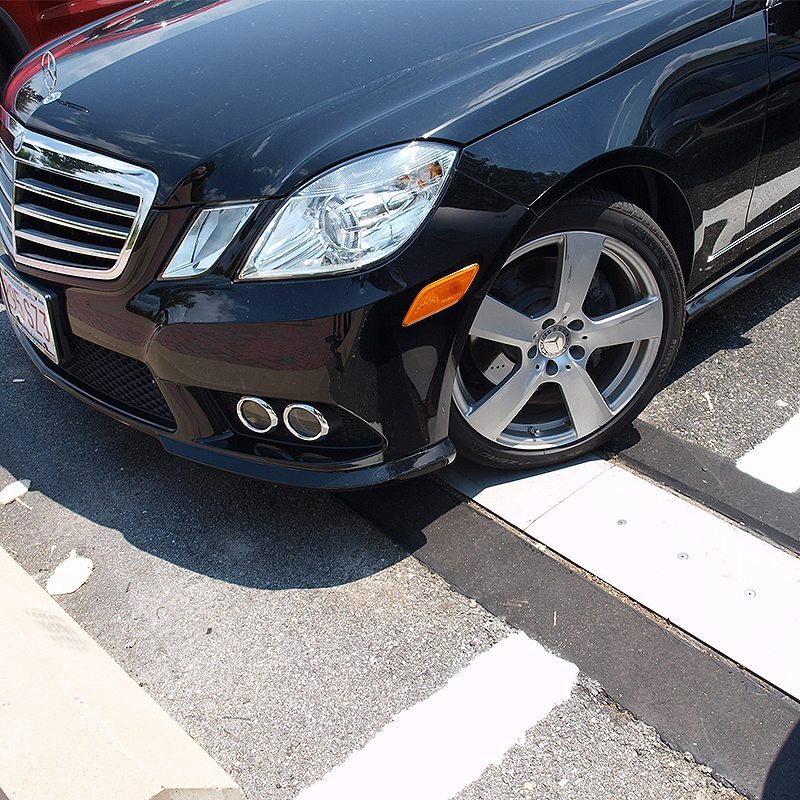
EMCRETE can be grinded to the appropriate height, it functions as a
leveling surface for cover plates (as seen here in the
SJS Seismic Joint System
from EMSEAL). Elimination of spacing under the coverplate prevents plate
rocking thereby dampening rattles and other sounds.

The
THERMAFLEX System by EMSEAL
permanently embeds the side flanges in EMCRETE elastomeric nosing
material.
PERFORMANCE PROPERTIES
IMPORTANT: When comparing elastomeric concrete materials it is vital
to compare the data of the fully mixed material. Resin-only data is
irrelevant as the material is not used without aggregate. Aggregate
increases compressive strength at the expense of flexibility and
brittleness.
Heavy aggregate loading, while it reduces cost, is
detrimental to performance of the material as an impact-absorbing
nosing and patching material. The following are properties of EMCRETE
(resins, sand, and chopped fiberglass) at as-supplied ratios.
AGGREGATE RATIO:
Ratio of Resin to Aggregate by Weight does not exceed 1:2
ADHESION: Pull Off Strength
Concrete (abraded, wiped, primed) exceeds 490 psi
Steel (abraded, wiped, primed) exceeds 485 psi
Galvanzied Steel (wiped, primed) exceeds 535 psi
IMPACT: Ball Drop Test
1-pound steel ball dropped onto 3/8” thick (8mm) x 2.75” diameter
(70mm) disk from 17 feet:
At room temperature (69°F; 20°C) no cracks
At -4°(F); -20°C no cracks
HARDNESS:
ASTM D 2240 at 77°F (25°C)
98 Shore A
57 Shore D |
INSTALLATION SUMMARY
The following is a summary. Complete installation instructions can
be found in the EMCRETE
Installation Data Sheet.
Substrates must be thoroughly dry and the temperature must be at least
45°F (8°C) and rising to install EMCRETE. The bonding surface should be
in sound and good condition before prepping. The entire bonding surface
is to be wire brushed and fully cleaned leaving no contaminants such as
dirt, dust, oils, or other residue on any surface. Next, the area where
the EMCRETE will be poured should be fully prepped and formed. The
substrate is then primed with the EMPRIME primer that is included with
units of EMCRETE and allowed to dry for 30 minutes. The EMCRETE is then
mixed in accordance with the complete Installation Instructions in the
pre-measured amounts provided. The EMCRETE is then poured into the forms
where it will self-level and cure exothermically. It can be trowelled to
ensure a consistent surface. The working time of EMCRETE is less than
10-minutes after mixing. Working time, and cure time, is longer in cool
weather and shorter in hot weather.
SUPPLY
Packaging
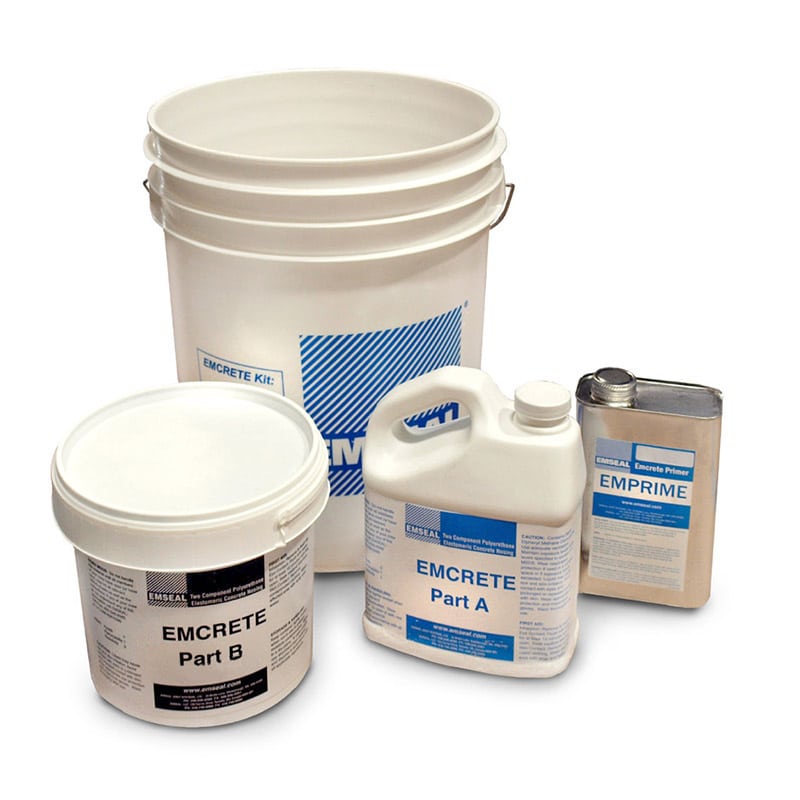
EMCRETE Elastomeric Concrete is sold by the unit. Each unit is comprised
of pre-measured containers which hold the liquids (Parts A & B) and Sand
and Fiber.

Yield*
1 Unit: 10,375 cubic cm (633 cubic inches)
*account for a 5% waste factor |